Résumé Rejected by a Robot: How Automated Screening Is Quietly Eliminating Your Strongest Applicants
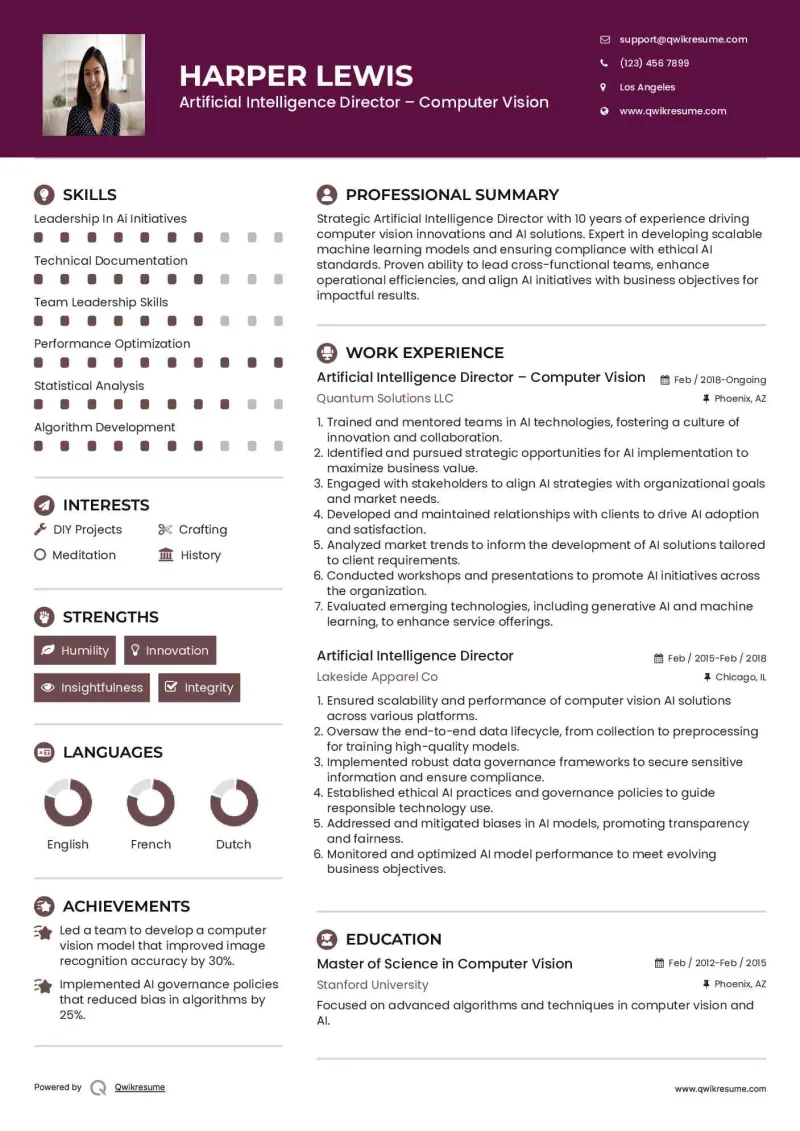
Photo: artificial intelligence resume screening technology office, via assets.qwikresume.com
For decades, the bottleneck in hiring was human attention. Recruiters could only read so many résumés, which meant some qualified candidates inevitably slipped through the cracks. Artificial intelligence promised to solve that problem — to process thousands of applications with speed and consistency that no human team could match. And in certain respects, it has delivered.
But a quieter problem has emerged in its place. Across industries and company sizes, employers are discovering that the very tools designed to surface the best candidates are, in many cases, eliminating them. The filters meant to create efficiency are functioning as invisible gatekeepers — ones that reward formatting conventions and keyword density over genuine capability.
How Algorithmic Screening Actually Works
Most applicant tracking systems (ATS) and AI-assisted screening tools operate on a relatively straightforward principle: they parse résumé text, extract relevant data points, and score candidates against a predefined set of criteria. Those criteria typically include job title matches, years of experience, educational credentials, and the presence of specific keywords drawn from the job description.
On the surface, this sounds reasonable. In practice, the logic has significant limitations. A candidate who spent five years as a "Client Success Manager" at a technology firm may be automatically deprioritized for a role seeking a "Customer Relationship Director" — despite the positions being functionally identical. A career coach who transitioned into talent development after fifteen years in education may be scored lower than a less experienced candidate whose résumé simply contains more of the right phrases.
These are not edge cases. They represent a structural flaw in how current screening tools interpret human career narratives.
The Formatting Penalty
Beyond semantic mismatches, many AI screening platforms struggle with résumé formats that deviate from basic templates. Candidates who use tables, text boxes, graphics, or unconventional section headers — features that are visually effective for human readers — often find their information parsed incorrectly or ignored entirely.
A software engineer whose résumé includes a skills matrix in a formatted table may have that information stripped out during parsing. A marketing professional who lists accomplishments in a visually organized sidebar may find that sidebar invisible to the algorithm scanning her application.
The irony is notable: candidates who invest effort in presenting their qualifications clearly and creatively are penalized, while those who submit plain, keyword-dense documents advance — regardless of underlying competence.
Non-Traditional Paths and the Penalty They Carry
Perhaps the most consequential blind spot involves candidates with non-linear career histories. The American workforce has undergone significant structural changes over the past two decades. Freelance work, entrepreneurship, contract roles, caregiving gaps, and lateral moves across industries are now common features of professional biographies — not anomalies.
Algorithms trained on historical hiring data, however, frequently treat these patterns as risk signals. A two-year gap in traditional employment — whether caused by launching a business, caring for a family member, or completing advanced training — may trigger an automatic downgrade in candidate scoring. A career that spans multiple industries, even when that breadth is directly relevant to the role, may be interpreted as instability rather than versatility.
This matters enormously at scale. When a single job posting attracts five hundred applications, the candidates eliminated in the first automated pass never receive human consideration. The hiring manager never knows what was filtered out.
What Algorithms Prioritize Versus What Predicts Performance
Research on employee performance consistently points to a set of attributes that are difficult to encode in résumé text: problem-solving agility, interpersonal effectiveness, adaptability under pressure, and the capacity to learn quickly in new environments. These are the qualities that distinguish high performers from average ones across nearly every role and industry.
Keyword frequency predicts none of these things. Neither does the presence of a degree from a specific institution, a job title that matches a standardized taxonomy, or an unbroken sequence of conventional employment dates.
Yet these are precisely the signals that most screening algorithms are built to evaluate. The result is a system that excels at identifying candidates who resemble previous hires — not candidates who will outperform them.
Strategies for Employers
Organizations serious about hiring quality, rather than hiring efficiency, should consider a deliberate audit of their screening infrastructure. Specifically:
Review rejection patterns for demographic and background skew. If your automated screening consistently deprioritizes candidates from certain educational backgrounds, geographic regions, or career trajectories, that pattern warrants scrutiny.
Expand keyword libraries beyond the job description. Work with hiring managers to identify synonyms, adjacent titles, and alternative phrasings for critical competencies. A narrow keyword list creates a narrow candidate pool.
Introduce human review at earlier stages for high-stakes roles. Automation is most defensible as a first pass for high-volume, lower-complexity positions. For roles where talent quality has outsized organizational impact, algorithmic filtering should be treated as a starting point — not a final decision.
Test your own ATS with known-qualified profiles. Submit résumés from high-performing current employees through your own screening system and observe how they are scored. The results are frequently illuminating.
Strategies for Job Seekers
Until employers reform their processes, candidates must navigate the current landscape strategically.
Mirror language from the job description. This is not about dishonesty — it is about translation. If your experience is genuinely relevant, describe it using the vocabulary the employer has already signaled they recognize.
Simplify formatting for digital submission. Reserve visually sophisticated résumé designs for in-person presentations or PDF attachments delivered directly to a human contact. For ATS submission, clean and parseable outperforms creative and complex.
Address gaps and non-traditional elements proactively. A brief, confident note in a cover letter or résumé summary that contextualizes a career gap or lateral move is far more effective than hoping the algorithm interprets ambiguity charitably.
Pursue direct channels whenever possible. Networking, referrals, and direct outreach to hiring managers bypass automated screening entirely — a significant advantage in a landscape where the algorithm may be your first and most consequential evaluator.
The Larger Accountability Question
AI screening tools are not inherently problematic. Applied thoughtfully, with regular calibration and human oversight, they can meaningfully improve recruiting efficiency. The issue is not the technology itself — it is the assumption that automation is neutral, or that its outputs reflect genuine merit.
For American employers competing in a tight labor market, the cost of that assumption is measured in missed hires, lengthened time-to-fill, and organizational capability that never materialized because the right candidate was rejected by a system no one thought to question.
At AditroRecruit, we believe that connecting talent with opportunity requires more than efficient processing — it requires judgment. The most effective hiring systems are those that use automation to support human decision-making, not replace it. That distinction, in the current environment, is everything.